Signed into law
GENIUS Act
This act establishes a regulatory framework for payment stablecoins (digital assets which an issuer must redeem for a fixed value). Under the act, only permitted issuers may issue a payment stablecoin for use by U.S. persons, subject to certain exceptions and safe harbors. Permitted issuers must be a subsidiary of an insured depository institution, a federal-qualified nonbank payment stablecoin issuer, or a state-qualified payment stablecoin issuer. Permitted issuers must be regulated by the appropriate federal or state regulator. Permitted issuers may choose federal or state regulation; however, state regulation is limited to those with a stablecoin issuance of $10 billion or less. Permitted issuers must maintain reserves backing the stablecoin on a one-to-one basis using U.S. currency or other similarly liquid assets, as specified. Permitted issuers must also publicly disclose their redemption policy and publish monthly the details of their reserves. The act specifies requirements for (1) reusing reserves; (2) providing safekeeping services for stablecoins; and (3) supervisory, examination, and enforcement authority over federal-qualified issuers. The act allows foreign issuers of stablecoins to offer, sell, or make available in the United States stablecoins using digital asset service providers, subject to requirements, including a determination by the Department of Treasury that they are subject to comparable foreign regulations. Under the act, permitted payment stablecoins are not considered securities or commodities under law. However, permitted issuers are subject to the Bank Secrecy Act for anti-money laundering and related purposes.
- Measure
- S. 1582 · 119th Congress
- Latest action
- July 18, 2025
- Policy changes
- 18
- Source
- CRS summary (Public Law) · Congress.gov
Became Public Law No: 119-27.
Read it yourself · The summaries below are the Congressional Research Service’s. Under each one you can open the bill’s own wording, or read the full text (enrolled (sent to the President)).
What it would cost
Congressional Budget Office estimate
July 11, 2025 · As passed by the Senate on June 17, 2025 · Read CBO’s estimate
Open the estimate for CBO’s figures; we haven’t copied them here yet.
Dollar amounts in the bill itself
The bill’s text doesn’t provide or authorize any money directly.
Fines and penalties
The most a violator can be fined.
- $1 million Sec. 3(1) In general Whoever knowingly participates in a violation of subsection (a) shall be fined not more than $1,000,000 for each such violation, imprisoned for not more than 5 years, or both.
- $500,000 Sec. 4(B) Penalty Whoever knowingly and willfully participates in a violation of subparagraph (A) shall be fined by the Department of the Treasury not more than $500,000 for each such violation.
- $1 million Sec. 4(A) In general Whoever knowingly participates in a violation of paragraph (1) shall be fined not more than $1,000,000 for each such violation, imprisoned for not more than 5 years, or both.
- $100,000 Sec. 6(A) Failure to be approved Any person that issues a United States dollar-denominated payment stablecoin in violation of section 3, and any institution-affiliated party of such a person who knowingly participates in issuing such a payment stablecoin, shall be liable for a civil penalty of not more than $100,000 for each day during which such payment stablecoins are issued.
- $100,000 Sec. 6(B) First tier Except as provided in subparagraph (A), a permitted payment stablecoin issuer or institution-affiliated party of such permitted payment stablecoin issuer that materially violates this Act or any regulation or order issued under this Act, or that materially violates any condition imposed in writing by the appropriate primary Federal payment stablecoin regulator in connection with a w…
- $100,000 Sec. 6(C) Second tier Except as provided in subparagraph (A), and in addition to the penalties described in subparagraph (B), a permitted payment stablecoin issuer or institution-affiliated party of such permitted payment stablecoin issuer who knowingly participates in a violation of any provision of this Act, or any regulation or order issued under this Act, shall be liable for a civil penalty of not m…
- $100,000 Sec. 8(A) Digital asset service providers Any digital asset service provider that knowingly violates a prohibition under paragraph (1)(B) shall be subject to a civil monetary penalty of not more than $100,000 per violation per day.
- $1 million Sec. 8(B) Foreign payment stablecoin issuers Any foreign payment stablecoin issuer that knowingly continues to publicly offer a payment stablecoin in the United States after publication of the determination of noncompliance under paragraph (1)(A) shall be subject to a civil monetary penalty of not more than $1,000,000 per violation per day, and the Secretary of the Treasury may seek an injunction in a d…
11 other dollar figures (thresholds, limits, tax amounts)
- $50 billion Sec. 4(i) In general A permitted payment stablecoin issuer with more than $50,000,000,000 in consolidated total outstanding issuance, that is not subject to the reporting requirements under section 13(a) or 15(d) of the Securities and Exchange Act of 1934 (15 U.S.C. 78m, 78o(d)), shall prepare, in accordance with generally accepted accounting principles, an annual financial statement, which shall includ…
- $10 billion Sec. 4(1) Option for State-level regulatory regime Notwithstanding the Federal regulatory framework established under this Act, a State qualified payment stablecoin issuer with a consolidated total outstanding issuance of not more than $10,000,000,000 may opt for regulation under a State-level regulatory regime, provided that the State-level regulatory regime is substantially similar to the Federal regu…
- $10 billion Sec. 4(1) Depository institution A State chartered depository institution that is a State qualified payment stablecoin issuer with a payment stablecoin with a consolidated total outstanding issuance of more than $10,000,000,000 shall—
- $10 billion Sec. 4(B) beginning on the date the payment stablecoin reaches such threshold, cease issuing new payment stablecoins until the payment stablecoin is under the $10,000,000,000 consolidated total outstanding issuance threshold.
- $10 billion Sec. 4(2) Other institutions A State qualified payment stablecoin issuer not described in paragraph (1) with a payment stablecoin with a consolidated total outstanding issuance of more than $10,000,000,000 shall—
- $10 billion Sec. 4(B) beginning on the date the payment stablecoin reaches such threshold, cease issuing new payment stablecoins until the payment stablecoin is under the $10,000,000,000 consolidated total outstanding issuance threshold.
- $10 billion Sec. 4(A) In general Notwithstanding paragraphs (1) and (2), the applicable primary Federal payment stablecoin regulator may permit a State qualified payment stablecoin issuer with a payment stablecoin with a consolidated total outstanding issuance of more than $10,000,000,000 to remain solely supervised by a State payment stablecoin regulator.
- $10 billion Sec. 6(1) In general Each permitted payment stablecoin issuer that is not a State qualified payment stablecoin issuer with a payment stablecoin with a consolidated total outstanding issuance of less than $10,000,000,000 shall be subject to supervision by the appropriate primary Federal payment stablecoin regulator.
- $10 billion Sec. 6(1) Suspension or revocation of registration The primary Federal payment stablecoin regulator of a permitted payment stablecoin issuer that is not a State qualified payment stablecoin issuer with a payment stablecoin with a consolidated total outstanding issuance of less than $10,000,000,000 may prohibit the permitted payment stablecoin issuer from issuing payment stablecoins, if the primary Feder…
- $10 billion Sec. 6(2) Cease-and-desist proceedings If the primary Federal payment stablecoin regulator of a permitted payment stablecoin issuer that is not a State qualified payment stablecoin issuer with a payment stablecoin with a consolidated total outstanding issuance of less than $10,000,000,000 has reasonable cause to believe that the permitted payment stablecoin issuer or any institution-affiliated party of …
- $5,000 Sec. 19Section 13104(a)(3) of title 5, United States Code, is amended, in the first sentence, by striking “, or any deposits” and inserting “, any payment stablecoins issued by a permitted payment stablecoin issuer aggregating $5,000 or less held, or any deposits”.
Read from the bill’s text by matching dollar amounts and the words around them; check the linked section before relying on a figure.
Who wrote it
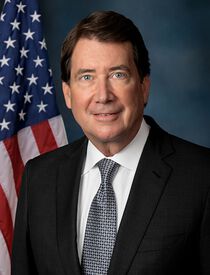
Sponsor
Sen. Bill Hagerty (R-TN)Joined by 5 cosponsors, 2 of them from the day it was introduced. Introduced May 1, 2025.
All 5 cosponsors
- Sen. Cynthia M. Lummis (R-WY) · original
- Sen. Tim Scott (R-SC) · original
- Sen. Dan Sullivan (R-AK)
- Sen. Bernie Moreno (R-OH)
- Sen. Pete Ricketts (R-NE)
How Congress voted
Senate · June 17, 2025
Passed Senate with an amendment by Yea-Nay Vote. 68 - 30. Record Vote Number: 318.
68 yea · 30 nay · 2 other · Republicans 50–2 · Democrats 18–26 · Independents 0–2 · Official record
House · July 17, 2025
On passage Passed by the Yeas and Nays: 308 - 122 (Roll no. 200).
308 yea · 122 nay · 2 other · Republicans 206–12 · Democrats 102–110 · Official record
Your delegation
Choose your state to see how your senators and representatives wrote, voted on, and spoke about this bill.
In their own words
What members have said about this bill, quoted exactly and linked to the source.
We haven’t found public statements from members about this bill yet.
What it changes — and your vote
One person, one vote · Anyone may read. To vote, verify your identity once with a government-issued ID — we keep no copy of it. Verify to vote
Sec. 3
Establishes that only payment stablecoin issuers permitted under this act are allowed to issue a payment stablecoin in the United States.
Knowing violations of this requirement shall be subject to a fine of up to $1 million for each violation, up to 5 years imprisonment, or both. Treasury may issue regulations establishing limited safe harbors from this requirement that are consistent with the act's purposes, limited in scope, and apply to a de minimus volume of transactions. Three years after the date of enactment, digital asset service providers are prohibited from offering or selling stablecoins that are not issued by permitted issuers. Providers are also prohibited from offering, selling, or otherwise making available in the United States a foreign-issued payment stablecoin, unless it complies with requirements provided in section 18 of the act.
›Read the bill’s wording · Sec. 3
Loading the text…
No verified votes yet
Sec. 4
Establishes requirements for permitted issuers. Issuers must maintain reserves on a one-to-one basis. Reserves must be comprised of:
• U.S. coins and currency; • demand deposits or shares at an insured depository institution; • certain Treasury acts, notes, or bonds; • money received under certain repurchase agreements or reverse repurchase agreements; • certain investment company securities and money market funds invested in certain approved assets on this list; • similarly liquid federal assets approved by regulators; or • certain listed reserves in tokenized forms. Issuers must comply with redemption requirements, such as establishing timely redemption procedures and disclosing such procedures and associated fees. Issuers must also report on the monthly composition of the issuer's reserves. These reports must be examined by a registered public accounting firm and certified by the chief executive officer and chief financial officer of the issuer. The section prohibits the rehypothecation, or reuse, of reserves with limited exceptions. Primary federal payment stablecoin regulators (federal regulators) and state payment stablecoin regulators (state regulators), where applicable, must issue regulations to implement capital requirements, liquidity reserve standards, reserve asset diversification standards, and risk management standards. Issuers are subject to the anti-money laundering and counterterrorism requirements that are applicable to financial institutions. The section sets forth requirements regarding activities of a permitted issuer, including by prohibiting issuers from providing services on the condition that a customer obtains an additional paid product or service from the issuer or a subsidiary. Large issuers (those with more than $50 billion in consolidated total outstanding issuance) must publish an audited annual financial statement in accordance with generally accepted accounting principles. The section prohibits a public nonfinancial services company from issuing payment stablecoins unless the company obtains unanimous approval from the Stablecoin Certification Review Committee. A state qualified payment stablecoin issuer with a consolidated total outstanding issuance of not more than $10 billion may opt for state regulation if such regulation is substantially similar to the federal regulatory framework under this act. If the issuance exceeds that amount, the issuer must transition to federal regulation, receive a waiver from the federal regulator to remain under state regulation, or stop issuing stablecoins until the issuance is under the threshold.
›Read the bill’s wording · Sec. 4
Loading the text…
No verified votes yet
Sec. 5
Establishes requirements for stablecoins issued by subsidiaries of insured depository institutions and certain entities chartered by the Office of the Comptroller of the Currency (OCC) to issue payment stablecoins.
Federal regulators must establish an application process and a supervision framework for such entities. The section sets forth requirements for the review of applications, explanations for denials, and an appeals process.
›Read the bill’s wording · Sec. 5
Loading the text…
No verified votes yet
Sec. 6
Sets forth supervision, examination, and enforcement requirements for payment stablecoin issuers under federal supervision.
The provisions include reporting on financial conditions, risk management, compliance with the act, and compliance with sanctions and anti-money laundering requirements. The section specifies that payment stablecoin issuers with less than $10 billion in consolidated total outstanding issuance are subject to federal supervision if they are not state qualified payment stablecoin issuers. The section establishes civil penalties for violations of this act that are committed by those subject to federal supervision.
›Read the bill’s wording · Sec. 6
Loading the text…
No verified votes yet
Sec. 7
Establishes state regulatory authority over issuers that qualify for and elect state regulation.
The Federal Reserve Board may exercise enforcement authority over state issuers in unusual and exigent circumstances. The OCC must exercise enforcement authority over nonbank state issuers in these circumstances.
›Read the bill’s wording · Sec. 7
Loading the text…
No verified votes yet
Sec. 8
Requires foreign issuers to comply with the terms of lawful orders to be allowed to offer, sell, or make available for trading a payment stablecoin in the United States.
The section sets forth enforcement and appeal provisions. Treasury may waive the prohibition against the secondary trading of foreign payment stablecoins in the United States from noncompliant foreign issuers on a case-by-case basis if certain criteria are met.
›Read the bill’s wording · Sec. 8
Loading the text…
No verified votes yet
Sec. 9
Treasury must seek public comment regarding methods, techniques, or strategies for financial institutions to detect illicit activities involving digital assets and perform research and risk assessments on such methods, techniques, or strategies.
Treasury must report their legislative recommendations to Congress and the Financial Crimes Enforcement Network must issue rules based on the results.
›Read the bill’s wording · Sec. 9
Loading the text…
No verified votes yet
Sec. 10
Establishes requirements for custodial or safekeeping services for payment stablecoin reserves, collateral, and the private keys used to issue stablecoins.
Among other requirements, such property must be separately accounted for and not comingled with other assets of the custodian.
›Read the bill’s wording · Sec. 10
Loading the text…
No verified votes yet
Sec. 11
Addresses the treatment of payment stablecoins and stablecoin issuers in bankruptcy and insolvency proceedings, including their claim priority, conditions for an automatic stay, and the treatment of reserves as property of the estate.
Federal regulators must also report on topics regarding potential insolvency proceedings of issuers.
›Read the bill’s wording · Sec. 11
Loading the text…
No verified votes yet
Sec. 12
Federal regulators may, if determined necessary after an assessment, prescribe technical standards for issuers to promote compatibility and interoperability with other issuers and the broader digital finance system.
›Read the bill’s wording · Sec. 12
Loading the text…
No verified votes yet
Sec. 13
Requires regulators to issue regulations to carry out the act, with federal and state regulators and Treasury coordinating as appropriate.
›Read the bill’s wording · Sec. 13
Loading the text…
No verified votes yet
Sec. 14
Requires Treasury to study and report on nonpayment stablecoins, including endogenously collateralized payment stablecoins (a digital asset the originator of which has represented will be converted, redeemed, or repurchased for a fixed amount of monetary value and that relies solely on the value of another digital asset created or maintained by the same originator to maintain the fixed price).
›Read the bill’s wording · Sec. 14
Loading the text…
No verified votes yet
Sec. 15
Requires federal regulators to annually report on payment stablecoin activity trends, the number of payment stablecoin issuer applicants, and the potential financial stability risks to the safety and soundness of the broader financial system posed by payment stablecoin activities.
›Read the bill’s wording · Sec. 15
Loading the text…
No verified votes yet
Sec. 16
Defines authorities related to the act, such as by providing that the act does not limit the authority of a depository institution, credit union, national bank, or trust company to issue digital assets to represent deposits or shares.
Federal financial regulators may not require a financial institution to include certain digital assets held in its custody as a liability on financial statements or balance sheets.
›Read the bill’s wording · Sec. 16
Loading the text…
No verified votes yet
Sec. 17
Establishes that payment stablecoins issued by permitted issuers are not securities or commodities under federal law.
›Read the bill’s wording · Sec. 17
Loading the text…
No verified votes yet
Sec. 18
Provides an exception to the act's prohibition on foreign-issued payment stablecoins.
For the exception to apply, foreign issuers must be subject to regulation and supervision by a foreign country that is comparable to the requirements under this act, as determined by Treasury. The foreign issuer must also be registered with the OCC, hold sufficient reserves in a U.S. financial institution (subject to exceptions), and the country where the issuer is domiciled must not be subject to U.S. sanctions. The section sets forth requirements for Treasury's determination as to whether a foreign country has comparable regulatory and supervisory requirements, including the process of requesting a determination, the deadline for Treasury to render a decision, and the process by which Treasury may rescind a previous determination. The section also sets forth OCC registration requirements. Treasury may implement reciprocal or bilateral agreements between the United States and jurisdictions with comparable regulatory requirements.
›Read the bill’s wording · Sec. 18
Loading the text…
No verified votes yet
Sec. 19
Requires certain federal employees to disclose holdings over $5,000 of permitted payment stablecoins as part of required financial disclosures.
›Read the bill’s wording · Sec. 19
Loading the text…
No verified votes yet
Sec. 20
Takes effect on the earlier of (1) 18 months after the date of enactment, or (2) 120 days after federal regulators issue final regulations implementing the act.
›Read the bill’s wording · Sec. 20
Loading the text…
No verified votes yet